SkinLuna · The Ritual
Want results like these? Start your ritual today.
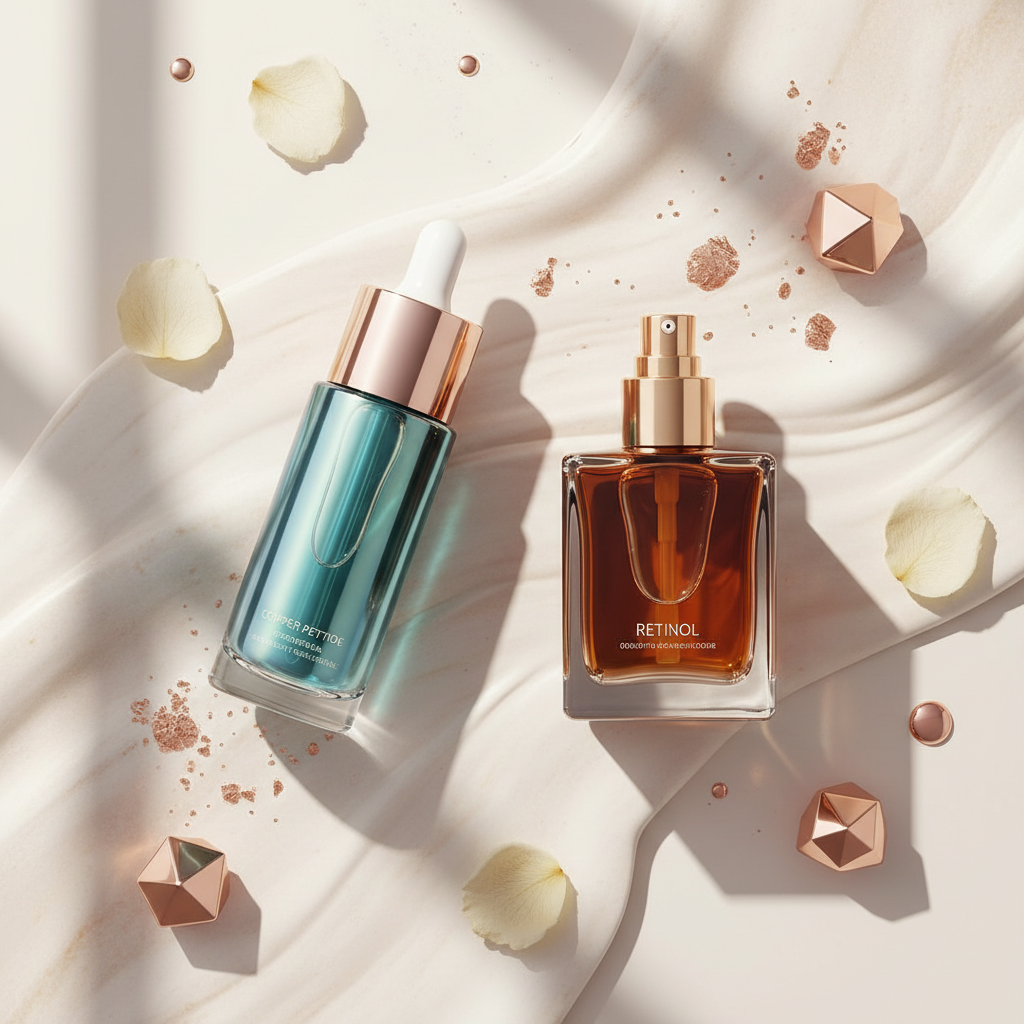
Unveiling Ageless Beauty: Copper Peptide vs. Retinol
As we navigate the sophisticated world of anti-ageing skincare, two formidable ingredients consistently emerge at the forefront of the conversation: copper peptides and retinol. Both are revered for their remarkable ability to rejuvenate the complexion and address the visible signs of ageing, but they operate through distinct mechanisms. For the discerning UK woman seeking to maintain a radiant, youthful glow, understanding the nuances of copper peptide vs retinol is paramount. At SkinLuna, we believe in empowering you with science-backed knowledge to make informed decisions for your skin's future.
Whether you're contending with fine lines, diminished elasticity, or uneven texture, selecting the right active ingredient can be transformative. Our journey will explore the unique prowess of each, guiding you towards an optimal choice for your individual skin concerns and sensitivity.
The Enduring Power of Retinol: The Gold Standard
Retinol, a derivative of Vitamin A, has long been hailed as the 'gold standard' in anti-ageing skincare. Its efficacy is extensively documented, making it a staple in many a beauty regimen across the UK and beyond. Retinol works primarily by accelerating cellular turnover, encouraging the shedding of old, dead skin cells and promoting the rise of new, healthy ones to the surface. This process is crucial for a smoother, more even complexion and can significantly reduce the appearance of wrinkles, hyperpigmentation, and blemishes.
- Collagen Production: Retinol is a powerful stimulator of collagen synthesis, the structural protein responsible for skin's firmness and elasticity. Over time, this leads to a reduction in fine lines and wrinkles.
- Cellular Turnover: By speeding up cell renewal, retinol helps to fade dark spots and improve skin texture, creating a more uniform tone.
- Acne Treatment: Its ability to unclog pores and reduce inflammation makes it effective against acne.
However, retinol's potent nature often comes with a caveat: potential side effects. Many individuals, especially those with sensitive skin, may experience redness, dryness, peeling, and increased sun sensitivity, particularly during the initial ‘retinisation’ phase. This necessitates careful introduction and consistent sun protection, making it a consideration for your morning vs. evening skincare routine UK.
Copper Peptides (GHK-Cu): Nature's Regenerative Marvel
Enter copper peptides, specifically GHK-Cu, a naturally occurring complex of copper and the tripeptide glycyl-L-histidyl-L-lysine. While perhaps newer to the mainstream lexicon than retinol, GHK-Cu is a superstar in its own right, lauded for its remarkable regenerative and healing properties. SkinLuna harnesses the power of GHK-Cu, understanding its profound impact on skin health.
GHK-Cu functions as a skin remodelling agent:
- Collagen & Elastin Boost: It signals the skin to produce more collagen and elastin, akin to retinol, but also promotes the synthesis of other vital skin components like glycosaminoglycans (e.g., hyaluronic acid).
- Antioxidant & Anti-Inflammatory: Copper is an essential trace element involved in numerous enzymatic reactions. GHK-Cu acts as a potent antioxidant, protecting skin cells from oxidative damage, and possesses significant anti-inflammatory properties, making it soothing for sensitised skin.
- Wound Healing & Repair: Historically, copper peptides have been studied for their ability to accelerate wound healing and repair damaged tissue, suggesting a powerful role in overall skin regeneration.[1] This makes them exceptional for restoring the skin barrier and promoting a healthier complexion.
One of the most compelling advantages of GHK-Cu is its excellent tolerability. It typically causes far less irritation than retinol, making it an ideal choice for those with sensitive skin, rosacea, or for individuals who find retinol too harsh. For more in-depth scientific insights, explore GHK-Cu: The Science Behind This Potent Anti-Ageing Peptide.
Copper Peptide vs Retinol: A Head-to-Head Comparison
To truly understand the choice between copper peptide vs retinol, let's delineate their primary attributes and how they stack up against each other for specific anti-ageing concerns.
| Feature | Retinol | Copper Peptides (GHK-Cu) |
|---|---|---|
| Primary Mechanism | Accelerates cell turnover, stimulates collagen, regulates sebum. | Promotes collagen/elastin synthesis, acts as antioxidant, supports wound healing, anti-inflammatory. |
| Key Benefits | Reduces wrinkles, fades hyperpigmentation, improves texture, clears acne. | Boosts collagen/elastin, enhances firmness, accelerates repair, reduces inflammation, antioxidant protection. |
| Side Effects | Potential redness, dryness, peeling, increased sun sensitivity, irritation. | Generally well-tolerated, very low irritation potential. Rare allergic reactions. |
| Skin Suitability | Ideal for resilient skin, moderate to severe ageing signs, acne-prone skin. | Excellent for sensitive skin, compromised skin barrier, overall regeneration, anti-inflammatory needs. |
| Speed of Results | Noticeable changes often within 3-6 months, can take longer. | Visible improvements can be seen within weeks, with ongoing regeneration. |
| Application Timing | Best used in the evening due to photosensitivity. | Can be used both morning and evening. |
Complementary or Conflicting?
It's natural to wonder if these two titans of anti-ageing skincare can coexist in a routine. The consensus amongst dermatologists and skincare formulators is that while both are incredibly effective, combining them directly can be tricky. Retinol's ability to destabilise certain peptides means they are often best used separately.
However, this doesn't mean you must choose one forever. Many individuals successfully integrate both by:
- Alternating Days: Using retinol on one evening and a copper peptide serum on another.
- Alternating Routines: Incorporating copper peptides into your morning routine and retinol into your evening routine.
- Targeted Application: Using retinol for specific areas of concern and copper peptides elsewhere or on alternating nights.
When considering which best anti-ageing serums UK to incorporate, remember that SkinLuna's GHK-Cu formulations are designed for maximum efficacy and gentle delivery, making them a superb addition to any regimen.
Who Should Choose What? Tailoring Your Anti-Ageing Strategy
The choice between copper peptide vs retinol ultimately hinges on your unique skin profile, concerns, and tolerance.
Opt for Retinol if:
- You have more resilient skin that tolerates potent actives well.
- Your primary concerns are significant wrinkles, deep lines, sun damage, and hyperpigmentation.
- You are also looking to address adult acne.
- You are committed to diligent sunscreen use.
Embrace Copper Peptides (GHK-Cu) if:
- You have sensitive, easily irritated, or reactive skin.
- You are focused on overall skin regeneration, healing, and barrier repair.
- Your goal is to improve skin firmness, elasticity, and achieve a healthy glow without harshness.
- You're looking for an ingredient that complements other actives without significant irritation.
- You prefer a more holistic, gentle yet powerful approach to anti-ageing, perhaps for younger skin looking for preventative measures, or mature skin seeking gentle rejuvenation. You can find out more about this approach in Skincare for Sophisticated Forties: Your UK Anti-Ageing Guide.
“Choosing between copper peptides and retinol isn't about declaring a single victor, but rather understanding their individual strengths to orchestrate a personalised skincare symphony. Both are powerful, but their application and suitability differ significantly based on individual skin needs and tolerance.”
Maximising Results: The SkinLuna Approach
At SkinLuna, we firmly believe in the transformative power of GHK-Cu copper peptides. Our formulations are meticulously crafted to deliver this potent ingredient in its most bioavailable and effective form, ensuring visible results without the common drawbacks of harsher actives. We understand the modern woman in the UK desires efficacy intertwined with elegance and skin health.
For those interested in exploring the pinnacle of peptide technology, our SkinLuna Copper Peptide Serum is an exquisite choice, designed to enhance your skin's natural regenerative processes, promoting firmness, reducing the appearance of lines, and imparting a luminous, healthy complexion.
When incorporating any new active, especially potent ones, patch testing is always recommended. Start slowly, observe your skin's response, and don't hesitate to consult with a dermatologist if you have specific concerns. For further expertise, you might look into GHK-Cu Copper Peptide: London Dermatologists' Insights.
The Verdict: A Synergistic Future
In the perennial debate of copper peptide vs retinol for anti-ageing, there isn't a definitive 'better' ingredient for everyone. Both offer profound benefits, targeting the myriad signs of ageing with scientific precision. Retinol, with its aggressive cellular turnover, is unmatched for rapid resurfacing and significant textural improvement, albeit with potential irritation. Copper peptides (GHK-Cu), conversely, offer a reparative, regenerative approach, fostering overall skin health, firmness, and a calm, resilient barrier, with minimal side effects.
Many skincare enthusiasts, particularly in the discerning London market, are discovering the art of strategic integration, leveraging the unique strengths of both. Whether you opt for one over the other, or a carefully choreographed routine incorporating both, the key is consistency and understanding your skin's unique needs. With SkinLuna, you’re investing in advanced, clinically-backed solutions designed to bestow graceful, enduring beauty.
Reveal Visibly Firmer, Younger Skin
GHK-Cu Copper Peptide Serum
Clinically formulated in London. Join thousands across the UK seeing radiant, lifted skin in weeks.
Frequently asked questions
While both are potent anti-ageing ingredients, using them directly together can sometimes reduce their efficacy or increase irritation, especially with retinol. It's generally recommended to alternate their application – for instance, use a copper peptide serum in the morning and retinol at night, o
Scientific sources
- PubMed — [1]
The Ritual
Discover the GHK-Cu Copper Peptide Serum
Clinically formulated in London. Loved across the United Kingdom for visibly firmer, radiant skin.
Shop Now →