SkinLuna · The Ritual
Want results like these? Start your ritual today.
Glycolic Acid: Your London Expert Guide to Radiance
At SkinLuna, we understand the pursuit of radiant, healthy skin is a journey, not a destination. In the bustling heart of London, where environmental stressors can often take their toll, discerning skincare enthusiasts are constantly seeking ingredients that deliver tangible results. Among these, glycolic acid stands out as a true stalwart – a powerful alpha hydroxy acid (AHA) revered for its transformative properties. But is glycolic acid truly the right choice for your unique skin? Let's delve into the science and sophisticated application of this remarkable ingredient.
What is Glycolic Acid? The Science Behind the Glow
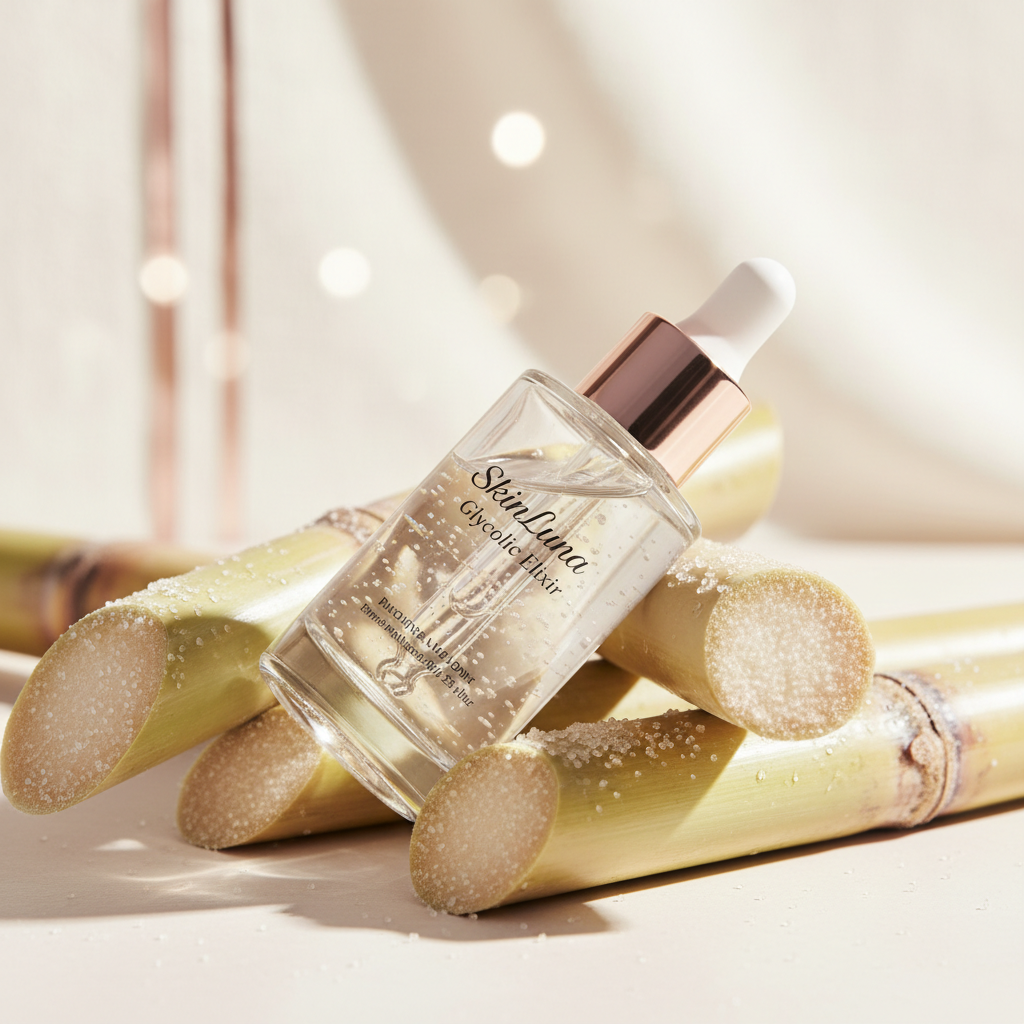
Glycolic acid is the smallest of the alpha hydroxy acids (AHAs), derived from sugar cane. Its diminutive molecular size allows it to penetrate the skin's surface most effectively compared to other AHAs, making it a highly efficient chemical exfoliant. Unlike physical scrubs, which can sometimes be harsh, glycolic acid works by dissolving the 'glue' that holds dead skin cells together on the outermost layer of your skin, the stratum corneum. This process, known as exfoliation, reveals the fresher, brighter skin cells beneath.
This shedding of dead cells isn't just about surface brightness; it triggers a cascade of beneficial cellular activities:
- Accelerated Cell Turnover: Your skin naturally sheds cells, but this process slows down with age. Glycolic acid helps speed it up, leading to a more youthful complexion.
- Improved Skin Texture: By removing rough, dull skin cells, it smooths the skin's surface, refining texture and making it feel softer.
- Enhanced Radiance: Fresh skin cells reflect light better, resulting in that coveted healthy glow.
- Stimulated Collagen Production: Studies suggest that regular use of AHAs can stimulate collagen synthesis, which is crucial for maintaining skin elasticity and firmness.
Who Can Benefit from Glycolic Acid? Identifying Your Skin's Needs
Glycolic acid is a versatile ingredient, but it truly shines for certain skin concerns. Consider whether your skin exhibits any of the following:
Dull, Lacklustre Skin
If your complexion appears tired, sallow, or simply lacks vitality, glycolic acid can be a game-changer. By regularly sweeping away dead surface cells, it instantly brightens and revitalises, revealing a fresh canvas.
Uneven Skin Tone & Hyperpigmentation
Whether you're contending with post-inflammatory hyperpigmentation (those frustrating dark spots left after a breakout), sun spots, or a generally uneven complexion, glycolic acid can help. Its exfoliating action aids in fading these discolourations over time, promoting a more uniform skin tone. For a deeper dive into this concern, explore our guide on hyperpigmentation: causes & lasting solutions for UK skin.
Fine Lines & Wrinkles
As mentioned, glycolic acid can gently encourage collagen production and improve the overall texture of the skin, which in turn can diminish the appearance of fine lines and superficial wrinkles. While it won't erase deep-set lines, it's an excellent component of an anti-ageing regimen. For comprehensive strategies, you might find our article on cracking the code: the science of fine lines & wrinkles (UK) insightful.
Mild Acne & Congestion
By preventing dead skin cells from clogging pores, glycolic acid can be beneficial for those prone to mild breakouts and blackheads. It helps keep pores clear, allowing for better skin function. However, for more inflammatory acne, other ingredients like salicylic acid might be more targeted. Often, a combination of thoughtful ingredients can lead to the best results. For example, our exquisite SkinLuna formulations often feature hero ingredients like GHK-Cu, or copper peptides, which work harmoniously with other active ingredients to support overall skin health and resilience.
Rough Skin Texture
If your skin feels rough to the touch or appears bumpy, glycolic acid can significantly smooth its surface, leading to a refined and silken feel.
When Glycolic Acid Might Not Be Your First Choice
While exceptionally beneficial, glycolic acid isn't for everyone, all the time. Here are instances where you might want to exercise caution or opt for alternatives:
- Highly Sensitive Skin: If your skin reacts easily to new products, is prone to redness, or you've been diagnosed with rosacea, glycolic acid might be too strong, especially at higher concentrations. Lactic acid, a gentler AHA, or polyhydroxy acids (PHAs) are often better starting points.
- Compromised Skin Barrier: If your skin barrier is damaged (e.g., from over-exfoliation, harsh weather, or certain conditions), introducing a potent exfoliant can exacerbate the issue. Focus on barrier repair first with nourishing ingredients.
- Active Sunburn or Open Wounds: Never apply glycolic acid to broken or severely irritated skin.
- During Retinoid Use (initially): When starting a retinoid, your skin often goes through an adjustment period. Combining it with glycolic acid might be too much. It's often best to alternate nights or use them in different routines (e.g., glycolic in the morning, retinoid at night, if tolerated). Always consult with a skincare expert.
- Very Dry Skin: While glycolic acid can improve the appearance of dry, flaky skin, it can also be slightly drying. Ensure you pair it with rich moisturisers and humectants like hyaluronic acid. You might find our discussion on is hyaluronic acid right for your skin? insightful.
How to Incorporate Glycolic Acid into Your Routine, Responsibly
The key to success with glycolic acid is mindful introduction and consistent, but not excessive, use. Think of it as a sophisticated tool in your skincare arsenal, requiring precision and respect.
Starting Slow and Low
Begin with a low concentration (e.g., 5% to 8%) and use it only 2-3 times a week, preferably in the evening. Observe how your skin responds over a few weeks before considering increasing frequency or concentration. Excessive use can lead to irritation, redness, and compromise your skin barrier.
Sun Protection is Non-Negotiable
AHAs, particularly glycolic acid, make your skin more sensitive to the sun. This is a crucial point we cannot stress enough at SkinLuna. Daily, broad-spectrum SPF 30 (or higher) is an absolute must, even on cloudy London days. Skipping this step negates all the benefits and can even lead to increased hyperpigmentation. The NHS advises consistent protection to prevent sun damage.
Layering Wisely
Generally, apply glycolic acid after cleansing and toning, before serums and moisturisers. If you use other active ingredients, be mindful of potential interactions. For instance, combining high concentrations of glycolic acid with other strong exfoliants or retinoids requires careful consideration.
Patch Testing is Prudent
Before applying a new glycolic acid product to your entire face, perform a patch test on a small, inconspicuous area (e.g., behind your ear or on your inner forearm) for a few days to check for adverse reactions.
The SkinLuna Perspective: Complementing Glycolic Acid
At SkinLuna, we curate ingredients that work in synergy to promote optimal skin health. While glycolic acid excels at exfoliation, we often pair it with restorative and protective elements. Our appreciation for copper peptides (GHK-Cu) stems from their extraordinary ability to support skin repair, reduce inflammation, and enhance antioxidant defence – a perfect counterbalance to an exfoliating regimen. Imagining an exfoliation cycle akin to architectural renovation, with copper peptides as the master builders, is a fitting analogy.
Addressing Common Concerns: Glycolic Acid FAQs
Can I use glycolic acid every day? While some seasoned users might tolerate daily use, it's generally recommended to start with 2-3 times a week and gradually increase if your skin tolerates it well. Listen to your skin – redness, stinging, or excessive dryness are signs to reduce frequency.
What concentration should I start with? For home use, most experts recommend starting with products containing 5% to 10% glycolic acid. Higher concentrations are typically reserved for professional treatments.
Can glycolic acid help with acne scars? Glycolic acid can improve the appearance of superficial acne marks (post-inflammatory hyperpigmentation) and mild textural irregularities. For deeper pitted scars, other treatments might be more effective, but it can be a valuable part of a broader protocol.
Final Thoughts on Glycolic Acid and Your Skin
For many in the UK seeking a genuine improvement in their skin's texture, tone, and overall radiance, glycolic acid proves to be an invaluable ally. Its ability to effectively exfoliate and encourage cellular renewal can leave skin looking smoother, brighter, and more youthful. However, like all potent active ingredients, it demands respect, careful introduction, and a steadfast commitment to sun protection.
By understanding its mechanism and thoughtfully integrating it into your routine, you can harness the full potential of glycolic acid to reveal your most luminous complexion. At SkinLuna, we believe in empowering you with knowledge, ensuring your skincare choices are as informed as they are elegant. If you're navigating the complexities of advanced skincare, remember that a balanced approach, often incorporating restorative ingredients like GHK-Cu, creates the optimal environment for your skin to truly thrive.
Reveal Visibly Firmer, Younger Skin
GHK-Cu Copper Peptide Serum
Clinically formulated in London. Join thousands across the UK seeing radiant, lifted skin in weeks.
Frequently asked questions
Most experts recommend starting with a glycolic acid product 2 to 3 times per week, typically in the evening. Observe your skin's tolerance; if no irritation occurs, you might gradually increase frequency, but daily use is only suitable for some and often advised with lower concentrations.
Scientific sources
The Ritual
Discover the GHK-Cu Copper Peptide Serum
Clinically formulated in London. Loved across the United Kingdom for visibly firmer, radiant skin.
Shop Now →