SkinLuna · The Ritual
Want results like these? Start your ritual today.
Hyaluronic Acid vs. Copper Peptides (GHK-Cu): Which Wins for UK Skin?
In the evolving world of luxury skincare, discerning individuals across the UK are constantly seeking ingredients that deliver tangible results. Two powerhouses frequently debated for their transformative effects are Hyaluronic Acid (HA) and Copper Peptides, specifically GHK-Cu. Both have garnered significant attention, but how do they truly compare, and which is better suited for the unique needs of British skin? At SkinLuna, we believe in arming you with the scientific knowledge to make informed decisions for your complexion.
This comprehensive guide will delve into the distinct mechanisms, benefits, and applications of these two remarkable ingredients, helping you understand their roles in hydration and anti-ageing. We'll explore whether hyaluronic acid vs copper peptides (GHK-Cu) is a fair comparison, or if they serve complementary purposes.
Understanding Hyaluronic Acid: The Hydration Maestro
Hyaluronic Acid is a naturally occurring glycosaminoglycan found throughout our bodies, particularly in our skin, connective tissues, and eyes. Its primary function is to retain water, and it does so phenomenally, holding up to 1,000 times its weight in water. This incredible humectant quality makes it an indispensable ingredient for skin hydration.
The Science of HA and UK Skin
When applied topically, HA acts like a magnet for moisture, drawing hydration from the atmosphere and deeper skin layers to the surface. This immediate surge of moisture helps to:
- Plump the Skin: Filling the intra-cellular matrix, reducing the appearance of fine lines and wrinkles and imparting a smoother, firmer look.
- Improve Skin Barrier Function: A well-hydrated skin barrier is more resilient against environmental aggressors, which is particularly beneficial in the often-harsh and fluctuating climate of the UK.
- Enhance Suppleness: Making the skin feel softer and more elastic.
Different molecular weights of HA exist, each penetrating to varying depths. High molecular weight HA works on the surface, forming a hydrating film, while lower molecular weight HA can penetrate deeper for more sustained hydration. For a detailed exploration, you might find our guide Hyaluronic Acid: Your UK Guide to Ultimate Hydration helpful.
Introducing Copper Peptides (GHK-Cu): The Regenerative Innovator
Copper Peptides, specifically the naturally occurring tripeptide GHK-Cu (glycyl-L-histidyl-L-lysine coupled with copper ions), are truly revolutionary. Discovered in the 1970s, GHK-Cu has been extensively researched for its profound regenerative and reparative capabilities within the skin.
The Science of GHK-Cu and Anti-Ageing
Unlike HA, which primarily focuses on hydration, GHK-Cu takes a more proactive role in skin remodelling. Its benefits are manifold:
- Collagen and Elastin Production: GHK-Cu signals the skin to produce more collagen and elastin, the crucial proteins that give skin its structure and elasticity. This directly tackles the root causes of fine lines and wrinkles and sagging.
- Antioxidant Protection: It possesses potent antioxidant properties, helping to neutralise free radicals that contribute to premature ageing and environmental damage – a common concern in urban areas like London.
- Wound Healing and Scar Reduction: GHK-Cu has been shown to accelerate wound healing and improve the appearance of scars, including acne scars and surgical scars, by promoting tissue remodelling. For more on this, research published in PubMed highlights its regenerative potential.
- Anti-Inflammatory Effects: It can help calm sensitive or irritated skin, making it beneficial for various skin concerns.
- Enhanced Skin Firmness and Clarity: Regular use leads to visibly firmer, smoother skin with improved tone and reduced hyperpigmentation.
GHK-Cu works by binding to copper, a vital trace element involved in numerous enzymatic reactions within the skin. This copper complex plays a critical role in tissue repair and regeneration, offering a comprehensive approach to anti-ageing that goes beyond simple hydration.
Hyaluronic Acid vs Copper Peptides (GHK-Cu): A Direct Comparison
It’s clear that both ingredients are commendable, but their 'winning' depends entirely on your primary skin concern. Let's delineate their key differences:
Primary Function:
- Hyaluronic Acid: Primarily a humectant, focusing on superficial and immediate hydration, plumping, and barrier support.
- Copper Peptides (GHK-Cu): Primarily a regenerative and reparative agent, stimulating collagen/elastin, providing antioxidant protection, and enhancing wound healing.
Immediate vs. Long-Term Results:
- HA: Provides rapid results in terms of improving skin hydration and giving a plump, dewy look almost instantly.
- GHK-Cu: Its benefits unfold over weeks and months as it works to remodel and regenerate skin from within. Results are more profound and long-lasting, focusing on structural improvements.
Targeted Concerns:
If your main concern is dehydrated skin, Hyaluronic Acid is your immediate go-to. If you are focused on addressing signs of ageing like fine lines, loss of firmness, uneven texture, or scar reduction, GHK-Cu stands out. A deeper dive into the broader aspects of ageing skin can be found in resources like NHS guidance on ageing.
Can You Use Them Together? The Synergy for UK Skin
Absolutely! The beauty of GHK-Cu and HA is not about which one 'wins', but rather how brilliantly they can complement each other. Think of it as a meticulously curated ensemble for your skin's health.
Hyaluronic Acid provides the essential hydration that creates an optimal environment for GHK-Cu to perform its reparative and regenerative functions. A well-hydrated skin barrier is more receptive to active ingredients and can better support the cellular processes GHK-Cu initiates.
Proposed routine integration:
- Cleanse: Start with a gentle cleanser.
- Tone: Follow with a hydrating toner.
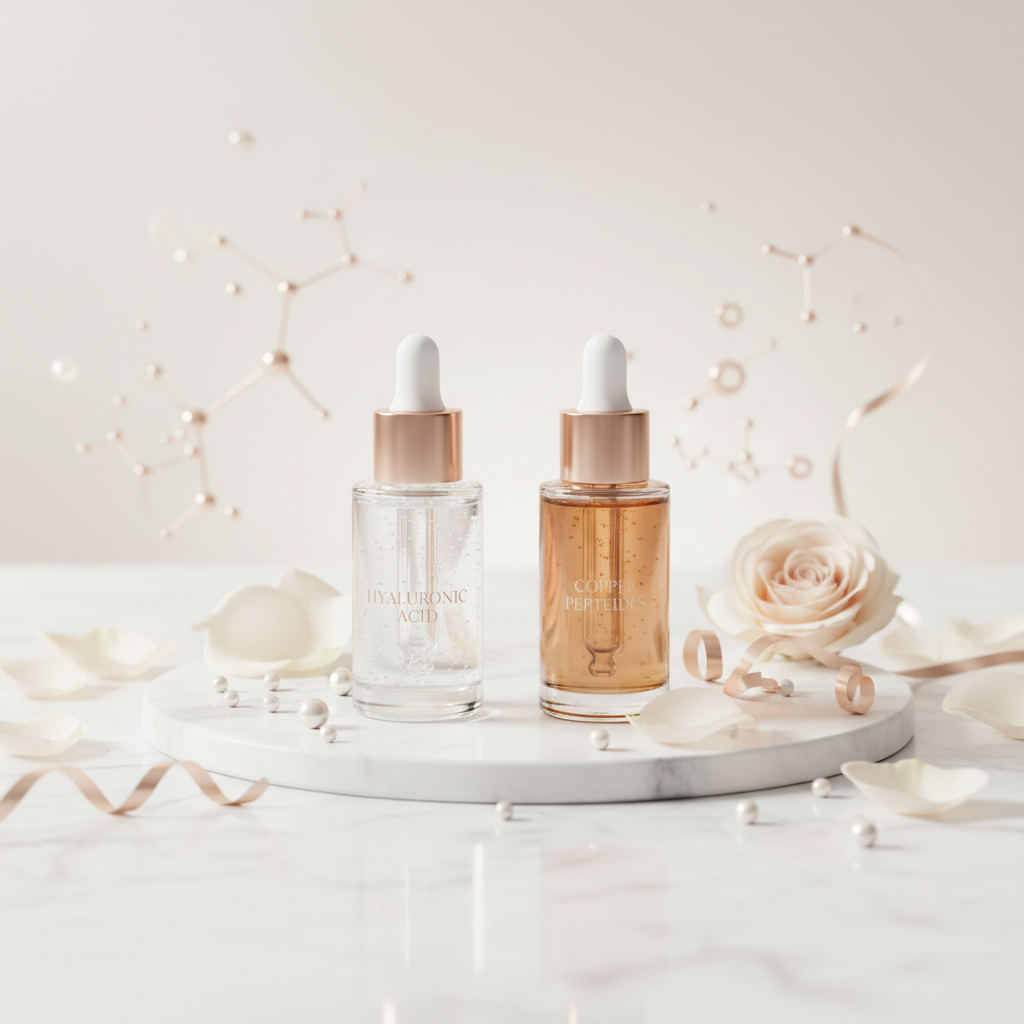
- GHK-Cu Serum: Apply your GHK-Cu serum first to allow its regenerative properties to penetrate. At SkinLuna, our GHK-Cu formulations are designed for optimal absorption.
- Hyaluronic Acid Serum: Layer a Hyaluronic Acid serum on top to lock in moisture and provide immediate plumping.
- Moisturiser: Finish with a nourishing moisturiser to seal everything in.
- SPF (Daytime): Always apply a broad-spectrum SPF during the day.
This layered approach ensures maximum benefit from both ingredients, leading to a complexion that is not only deeply hydrated but also structurally stronger, smoother, and more youthful. This comprehensive strategy is ideal for navigating the varied climates experienced across the UK, from coastal breezes to urban pollution.
What to Look For When Choosing Products
When selecting products containing these ingredients, especially for discerning UK customers, consider the following:
- Formulation Excellence: Look for stable, well-formulated products. For GHK-Cu, the percentage matters, as does the overall formulation's ability to deliver the peptide effectively.
- Ingredient Purity: Ensure high-quality, pure ingredients. Transparent sourcing is a hallmark of luxury skincare.
- Supporting Actives: Often, these hero ingredients are blended with other beneficial actives like antioxidants, ceramides, or niacinamide for enhanced results.
- Brand Reputation: Opt for brands with a strong foundation in science and efficacy. At SkinLuna, our commitment to clinical results and luxurious experience drives our formulations, including those featuring GHK-Cu.
The Final Verdict: A Synergistic Skincare Approach
In the debate of hyaluronic acid vs copper peptides (GHK-Cu) for UK skin, there isn't a single 'winner' if you seek comprehensive skin health. Hyaluronic Acid provides indispensable surface hydration and immediate plumping, creating a supple canvas.
Copper Peptides (GHK-Cu), on the other hand, are the long-term architects, rebuilding, repairing, and strengthening the very fabric of your skin from within. For an anti-ageing strategy that truly delivers, especially for the unique environmental challenges and aesthetic aspirations of our UK clientele, combining both ingredients offers unparalleled synergy. Embrace the power of both to achieve a resilient, radiant, and youthful complexion.
Explore our advanced formulations, including those featuring potent GHK-Cu, at SkinLuna to discover how these ingredients can transform your skin.
Reveal Visibly Firmer, Younger Skin
GHK-Cu Copper Peptide Serum
Clinically formulated in London. Join thousands across the UK seeing radiant, lifted skin in weeks.
Frequently asked questions
Yes, absolutely! They are highly complementary. Apply your GHK-Cu serum first to allow its regenerative properties to penetrate, then layer with a Hyaluronic Acid serum for intensive hydration and plumping. This synergy creates an optimal environment for comprehensive skin health.
Scientific sources
- PubMed — research published in PubMed
- NHS — NHS guidance on ageing
The Ritual
Discover the GHK-Cu Copper Peptide Serum
Clinically formulated in London. Loved across the United Kingdom for visibly firmer, radiant skin.
Shop Now →